Synopsis
A contemporary of Henry Moore, Yorkshire-born Barbara Hepworth has made Cornwall her home. This film by John Read examines how the Cornish landscapes have influenced Hepworth's work, and the artist takes us through the planning stages in the creation of her sculptures.
- Programme: Barbara Hepworth
- Channel: BBC
- Broadcast year: 1961
- Art & Design
Licence: ERA Licence required
Free to watch for UK schools, colleges and universities with an ERA Licence
UK only
Staff and students of licensed education establishments only
Cannot be adapted
Add Notes
More resources about Sculpture
A range of materials | Art: Contemporary Visions
An artist displays their use of unusual materials to create hanging sculptures.
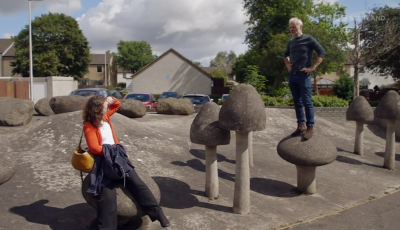
Art and marketing | Meet You at the Hippos
Malcolm Robertson considers how much of his public art created for Glenrothes evolved from art into advertisments for the town.
Art as a flood defence | Meet You at the Hippos
Denis Barnes discusses the simple ways he created public art initially with zero budget and how some even aided the natural w...
Art in Scottish ''new-towns'' | Meet You at the Hippos
Actor Mark Bonnar details Scotland's building boom of "new-towns" in the post-war era.
Barbara Hepworth | Sunday Feature
Historian Juliet Gardiner profiles Barbara Hepworth, Britain's most successful 20th century female sculptor. She visits Hepworth's studio a...
Birth of new towns | Meet You at the Hippos
The post-war government were keen to build communities as well as just housing but equally wanted to reduce the population of Gla...
Concrete Elephants | Meet You at the Hippos
Steve Bonnar discovers his concrete elephants have lost their trunks since he installed them, leaving him philosophical about art...
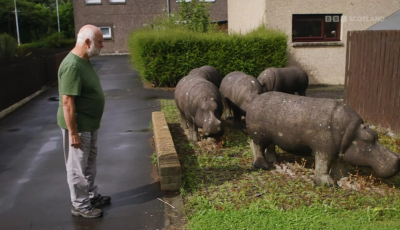
Concrete Hippos | Meet You at the Hippos
Steve Bonnar reflects 38-years later about his first new town public art project amounting in some concrete hippos.
Environmental art | Meet You at the Hippos
Andrew Dimitrius considers what environmental art is and how that differs from historic public art in the way of plinths and monum...
First Town Artist | Meet You at the Hippos
In the 1970's the town planners of Scotland's new-towns hired "town artists" to make public work that would complement the community.
Glaze | Handmade in Japan
The Hamadas are a famous family of potters, and we see Tomoo at work, shaping his pots and firing them in a wood-fuelled kiln.
Marcel Duchamp and His Fountain | Witness History
In October 1942, the great French artist Marcel Duchamp designed a surrealist exhibition in New York. Someone who helped hi...
Pottery traditions | Handmade in Japan
The Hamadas are a famous family of potters, and we see Tomoo at work, shaping his pots and firing them in a wood-fuelled kiln.
Tourism and art | Meet You at the Hippos
The public art in the new-towns instilled identity, which was challenged when the art was moved or painted much to the ambivalence o...
Town planner or Artist | Meet You at the Hippos
Brian Miller was just a town planner but was adamant to make new towns vibrant with murals and sculptures that all could enjoy.
Tracey Emin on Louise Bourgeois | Secret Knowledge
Tracey Emin offers an insight into the life and work of one of the great artists of the last century, Louise Bourgeois, fa...
What's the point in public art? | Meet You at the Hippos
Camille Archer ponders what public art is and why it is important to communities.