Synopsis
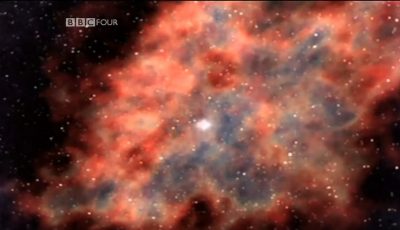
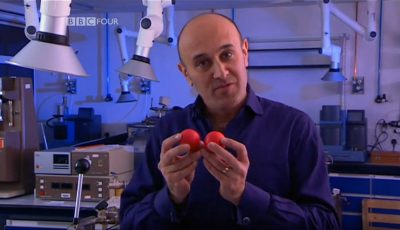
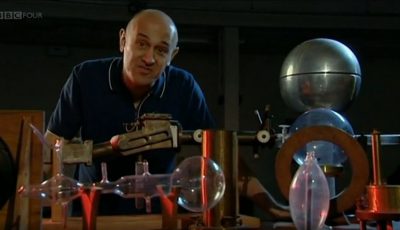
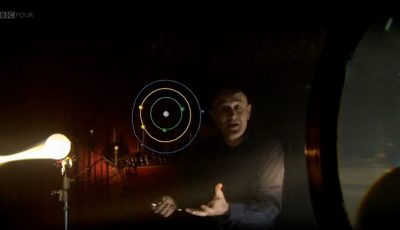
George Gamow believed that helium existed in the universe before the sun and the stars were formed.
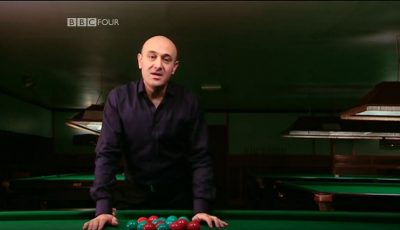
- Programme: Atom
- Episode: 02: The Key to the Cosmos
- Channel: BBC Four
- Broadcast year: 2007
- Physics
Licence: ERA Licence required
Free to watch for UK schools, colleges and universities with an ERA Licence
UK only
Staff and students of licensed education establishments only
Cannot be adapted
Add Notes
More clips from Atom
Discovery of the Neutron | Atom
Spec references J248: C1.2d, C1.2e J250: C1.2d, C1.2e. Professor Jim Al-Khalili explains how James Chadwick discovered the neutron. This solv...
Nuclear fusion | Atom
Sunlight is created by nuclear fusion in the Sun when two protons are fused together.
The discovery of nuclear fission | Atom
Scientists in the 1930's toyed with neutrons colliding with nucleai and were excited at the thought that such experiments could creat...
The furnaces in which everything was made | Atom
Fred Hoyle worked out how the heaviest elements were created through nuclear fusion.
The Key to the Cosmos | Atom
Jim Al-Khalili's documentary series about the building block of our universe, the atom. He shows how the mystery of the universe's creation was ...
The strong nuclear force | Atom
Like a magnet, protons will repel each other, however, as soon as they are close enough they will stick together.
More resources about Atomic Structure
Chernobyl disaster | Inside Chernobyl's Mega Tomb
Introduction to the 1986 Chernobyl disaster and the temporary construction that was built to contain the radiation.
History of the Atom: From Rutherfor to Bohr | Chemistry: A Volatile History
Spec references J248: C1.2a J250: C1.2a. Professor Jim Al-Khalili explains the history of the ato...
02: Out of Sight | Richard Hammond's Invisible Worlds
Richard Hammond uses groundbreaking imaging technology to take the viewer on a journey of discovery beyond the visible ...
02: Marie Curie's Radium | The Six Experiments That Changed The World
From Galileo to Einstein, from Faraday to Mendel: modern scientists try to recreate the seminal experim...
03: Off the Scale | Richard Hammond's Invisible Worlds
Richard Hammond explores the miniature universe around us, from microscopic changes to ice crystals that can trigger a...
Electricity and the Atomic scale | Shock and Awe: The Story of Electricity
Jim Al-Khalili explores how Ernest Rutherford's work on the atom revealed what electricity was on ...
Radioactive particle clean up mission | Bang Goes the Theory
Following a leak of thousands of radioactive particles in the 60's, a team at Dounreay are attempting to find an...
Radioactivity | Curriculum Bites
Schools science programme where topics in the double science curriculum are broken down into small chunks.
The discovery of nuclear fission | Atom
Scientists in the 1930's toyed with neutrons colliding with nucleai and were excited at the thought that such experiments could creat...
The strong nuclear force | Atom
Like a magnet, protons will repel each other, however, as soon as they are close enough they will stick together.
Types of nuclear radiation | Short Circuit
An explanation of alpha, beta and gamma radiation.
02: What is the World Made Of? | The Story of Science: Power, Proof and Passion
Michael Mosley explores how history shaped science. Here, he looks at how atomic theories and...
Albert Einstein | Icons
Einstein was a physicist who rewrote the rules of the universe. Hounded from his native Germany by the Nazis and fearful of what they were capable of...
Alpha particles | Chemistry: A Volatile History
Rutherford stated the fact that most alpha particles go straight through foil is evidence for the atom being mostly empty spa...
An Alpha, Beta and Gamma of Radioactivity | Short Circuit
Bringing chemistry, physics and biology to life using real-life examples, 3D graphics and practical experiments.
Chemical weapons | Inside Porton Down: Britain's Secret Weapons Research Facility
Introducing the idea of chemical and biological weapons, leading onto pathogens.
Discovery of the Neutron | Atom
Spec references J248: C1.2d, C1.2e J250: C1.2d, C1.2e. Professor Jim Al-Khalili explains how James Chadwick discovered the neutron. This solv...
Half-life | Short Circuit
Spec references J249: P6.1j, P6.2b J250: P4.3j. Explanation and animation - Nuclear decay is random. Half-life.
Inside Porton Down: Britain's Secret Weapons Research Facility
Michael Mosley investigates Porton Down, Britain's most secretive and controversial military research base. He...
Lab demonstration of alpha beta gamma penetration properties. | Short Circuit
Spec references J249: P6.1l J250: P4.3l. Laboratory demonstration of the penetration propertie...
More from Jim Al-Khalili
Nylon | Chemistry: A Volatile History
Jim Al-Khalili reveals the breakthroughs which harnessed elements' ability to release vast power, showing how scientists are trying to ...
Einstein and the beetle | Gravity and Me: The Force that Shapes our Lives
Professor Jim Al-Khalili explains Einstein's analogy of gravity that he told his son to explain his...
Prof Jim Al Khalili goes inside Calder Hall for his first look inside the core of a nuclear reactor | Britain's Nuclear Secrets: Inside Sellafield
Nuclear physicist Professo...
Sarah-Jayne Blakemore on teenage brains | The Life Scientific
Professor Sarah-Jayne Blakemore talks to Jim Al-Khalili about her research on the developing teenage brain.
The race to prove Maxwell's theory | Shock and Awe: The Story of Electricity
Jim Al-Khalili explains how physics professor Oliver Lodge proved Maxwell's theory that electrom...
Fukushima: Is Nuclear Power Safe? | Horizon
Six months after the explosions at the Fukushima nuclear plant in Japan, Professor Jim Al-Khalili sets out to discover whether nu...
Arabic, the language of God | Science and Islam
Jim Al-Khalili looks at how Islamic caliphs encouraged scientific research and made Arabic the official language of their vas...
Introduction to Electronic Structure and Chemical Properties | Atom
Spec references J248: C2.2h J250: C2.2h. Professor Jim Al-Khalili explains how chemical properties are de...
Electrolysis - Discovery of Potassium | Curriculum Bites
Spec references J248: C3.4b J250: C3.4b. Professor Jim Al-Khalili recreates the electrolysis experiment that lead to...