Synopsis
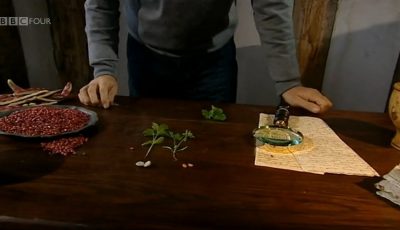
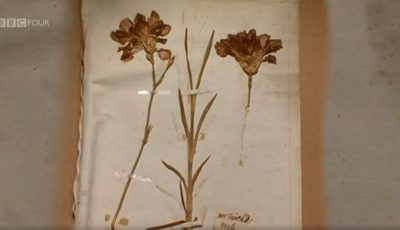
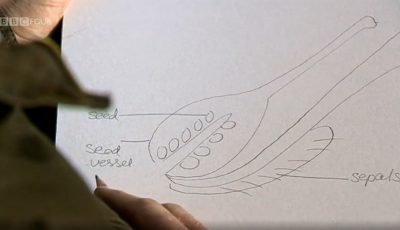
Timothy Walker explores how Darwin's Theory of Evolution influenced 19th century botanists' understanding of how and why plants evolved into different groups.
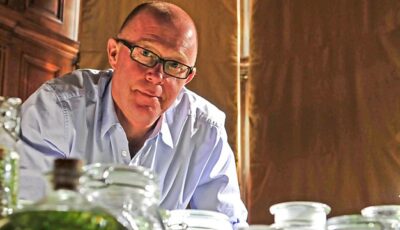
- Programme: Botany: A Blooming History
- Episode: 01: A Confusion of Names
- Channel: BBC Four
- Broadcast year: 2011
- Biology | Reproduction, genetics and evolution | Classification and biodiversity | Classification
Licence: ERA Licence required
Free to watch for UK schools, colleges and universities with an ERA Licence
UK only
Staff and students of licensed education establishments only
Cannot be adapted
Add Notes
More clips from Botany: A Blooming History
01: A Confusion of Names | Botany: A Blooming History
Timothy Walker reveals how the work of Carl Linnaeus, Phillip Miller and John Ray unlocked the mysteries of the plant k...
The first classification of plants | Botany: A Blooming History
Timothy Walker explores the beginnings of the classification of plants.
The first hybrid plant | Botany: A Blooming History
Thomas Fairchild was the first to artificially cross two plant species and produce a new hybrid plant. This brought him i...
The standardisation of names | Botany: A Blooming History
Timothy Walker looks at how Carl Linnaeus came up with his new naming system for plant species, and how it set the ...
Variation and defining species | Botany: A Blooming History
Timothy Walker looks at John Ray's discovery of variation, and how it formed the basis of our understanding of pl...
More resources about Variation and evolution
01: A Confusion of Names | Botany: A Blooming History
Timothy Walker reveals how the work of Carl Linnaeus, Phillip Miller and John Ray unlocked the mysteries of the plant k...
03: The Will to Win | Human Instinct
He explores the drive to succeed, looking at how different chemicals are released into the brain when we win or lose, and learning about...
Selective breeding and the 'Green Revolution' | Botany: A Blooming History
Norman Borlaug used selective breeding techniques to improve wheat production in Mexico. He produc...
The standardisation of names | Botany: A Blooming History
Timothy Walker looks at how Carl Linnaeus came up with his new naming system for plant species, and how it set the ...
01: Born To Survive | Human Instinct
A series in which Professor Robert Winston examines human instincts and patterns of behaviour. In this edition: instincts for survival i...
01: New Dawn | Walking with Beasts
The series following on from Walking with Dinosaurs. begins 49 million years ago. The world is heavily forested and birds rule the planet,...
01: The First of Us | Human
The extraordinary story of how the human species, Homo sapiens, first emerged, where the discoveries of recent years are revolutionising the unde...
01: The Mystery of Growth | Human Mutants
*Contains graphic images and nudity* Armand Leroi looks at how we grow and what happens when that growth mechanism goes wrong.
02: Into the Unknown | Human
Following early Homo sapiens's ancestors as they step out of Africa and venture into the wider world, heading into areas inhabited by other huma...
02: The Dangerous Womb | Human Mutants
*Contains graphic images and nudity* Armand Leroi explores the making of the human form in the womb,using cutting-edge genetics and em...
02: Whale Killer | Walking with Beasts
36 million years ago mammals ruled the world. It is in the sea, however, that the most monstrous mammals can be found.
03: Hidden World | Botany: A Blooming History
Timothy Walker looks at how pioneer botanists unlocked the patterns found in different types of plants and opened the door to a...
03: Land of Giants | Walking with Beasts
25 million years ago in the Oligocene Epoch lived the Indricotheres. Weighing 15 tonnes and standing 7 metres tall, they were the la...
03: Last Humans Standing | Human
Shocking new insights into the demise of modern humans' sister species, the Neanderthals, Homo sapiens's possible role in their downfall and...
03: Mendel and the Pea | The Six Experiments That Changed The World
From Galileo to Einstein, from Faraday to Mendel: modern scientists try to recreate the seminal experimen...
03: The Meaning of Beauty | Human Mutants
*Contains graphic images and nudity* Leroi uses cutting-edge genetics and embryology to explore what it means to be normal and why ...
04: Discovering the Americas | Human
During the height of the Ice Age, one of the coldest times humanity has ever known, Homo sapiens steps into the last habitable continent...
04: Natural Born Heroes | Human Instinct
In this last programme, Professor Robert Winston discovers why we do so much for friends and family, and will even risk our lives fo...
04: Next of Kin | Walking with Beasts
We travel back 3 million years to Ethiopia, where Australopithecus, one of the first upright apes, lived in danger of being hunted by s...
05: A Great Gamble | Human
Around 12,000 years ago, as the Ice Age finally thawed, humanity made a dramatic shift - abandoning nomadic life for permanent settlements.