Synopsis
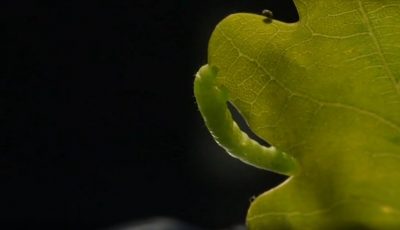
George McGavin looks at what happens when an outlandish group of insects highjacks the growth of an oak tree for its own ends. By laying its eggs in the female oak flower, the gall wasp causes a huge change in the way the tree grows.
- Programme: Oak Tree: Nature's Greatest Survivor
- Channel: BBC Four
- Broadcast year: 2015
- Biology | Ecology | Adaptations, interdependence and competition | Parasitism and mutualism
Licence: ERA Licence required
Free to watch for UK schools, colleges and universities with an ERA Licence
UK only
Staff and students of licensed education establishments only
Cannot be adapted
Add Notes
More clips from Oak Tree: Nature's Greatest Survivor
An Oak trees chemical defence system | Oak Tree: Nature's Greatest Survivor
It may look like an oak tree is a big green heap of insect food, but eating it is not that easy. ...
Looking at the history of a landscape using cores from peat bogs | Oak Tree: Nature's Greatest Survivor
A detailed look at a sample of peat from Marley Fen can show us an in...
Symbiotic relationships and the importance of roots | Oak Tree: Nature's Greatest Survivor
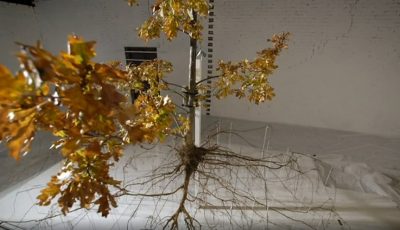
George McGavin investigates the dramatic life of the oak tree, which wouldn't surv...
The reproduction of an Oak tree | Oak Tree: Nature's Greatest Survivor
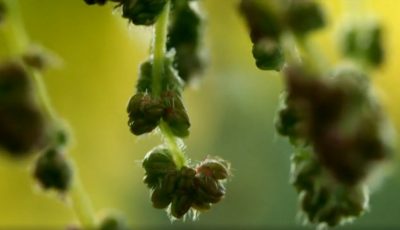
George McGavin investigates the reproduction of an oak tree, and how millions of tiny pollen grains tr...
An Oak trees chemical defence system | Oak Tree: Nature's Greatest Survivor
It may look like an oak tree is a big green heap of insect food, but eating it is not that easy. ...
Looking at the history of a landscape using cores from peat bogs | Oak Tree: Nature's Greatest Survivor
A detailed look at a sample of peat from Marley Fen can show us an in...
Symbiotic relationships and the importance of roots | Oak Tree: Nature's Greatest Survivor
George McGavin investigates the dramatic life of the oak tree, which wouldn't surv...
The reproduction of an Oak tree | Oak Tree: Nature's Greatest Survivor
George McGavin investigates the reproduction of an oak tree, and how millions of tiny pollen grains tr...
More resources about Plant tissues and transport
02: Growing | The Private Life of Plants
David Attenborough continues his incredible journey into the world of plants. Remarkable time-lapse photography reveals how new leav...
The pollination process | The Private Life of Plants
David Attenborough describes the process of pollination and how this helps plants reproduce.
Flight of the bumblebee | The Private Life of Plants
David Attenborough explores the role of insects, especially bees, in the pollination process.
03: Flowering | The Private Life of Plants
David Attenborough continues his incredible journey into the world of plants. He reveals how flowers use colours and perfumes for ...
01: Travelling | The Private Life of Plants
David Attenborough begins his incredible journey into the world of plants with a look at how plants move from place to place.
05: Living Together | The Private Life of Plants
David Attenborough looks at how plants often rely on animals, fungi and each other for food, protection or a home, but they ...
Plants in cold environments | The Private Life of Plants
David Attenborough describes how certain plant species adapt to cold weather.
The dead-horse arum and the titan arum | The Private Life of Plants
David Attenborough describes how the dead-horse arum and the titan arum are able to reproduce.
04: The Social Struggle | The Private Life of Plants
David Attenborough looks at the extraordinary battles for survival which are fought in the plant world.
06: Surviving | The Private Life of Plants
David Attenborough concludes his incredible journey into the world of plants with a look at the techniques plants use to survive e...
An Oak trees chemical defence system | Oak Tree: Nature's Greatest Survivor
It may look like an oak tree is a big green heap of insect food, but eating it is not that easy. ...
Looking at the history of a landscape using cores from peat bogs | Oak Tree: Nature's Greatest Survivor
A detailed look at a sample of peat from Marley Fen can show us an in...
Symbiotic relationships and the importance of roots | Oak Tree: Nature's Greatest Survivor
George McGavin investigates the dramatic life of the oak tree, which wouldn't surv...
The reproduction of an Oak tree | Oak Tree: Nature's Greatest Survivor
George McGavin investigates the reproduction of an oak tree, and how millions of tiny pollen grains tr...