Synopsis
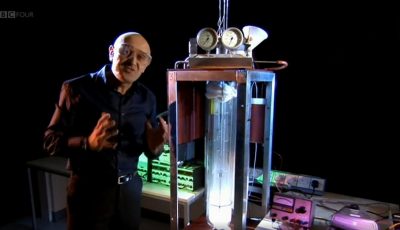
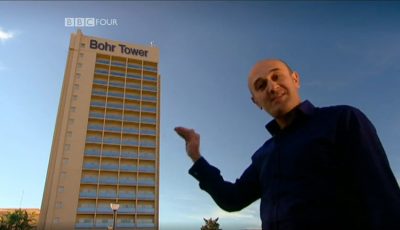
Nikola Tesla invented alternating current (AC) which allowed no electrical power to be lost when passing through a current.
- Programme: Shock and Awe: The Story of Electricity
- Episode: 02: The Age of Invention
- Channel: BBC Four
- Broadcast year: 2011
- Physics
Licence: ERA Licence required
Free to watch for UK schools, colleges and universities with an ERA Licence
UK only
Staff and students of licensed education establishments only
Cannot be adapted
Add Notes
More clips from Shock and Awe: The Story of Electricity
02: The Age of Invention | Shock and Awe: The Story of Electricity
Jim Al-Khalili shows how harnessing the link between magnetism and electricity transformed the world, allo...
Electricity, Magnetism, Motion | Shock and Awe: The Story of Electricity
Hans Christian Ørsted discovered that an electric current creates a magnetic field.
Electromagnets and telegraphs | Shock and Awe: The Story of Electricity
Jim Al-Khalili explains how an electromagnet works and how it paved the way for the birth of the tele...
The first light bulbs | Shock and Awe: The Story of Electricity
Jim Al-Khalili explores the history of Thomas Edison's first incandescent light bulb.
02: The Age of Invention | Shock and Awe: The Story of Electricity
Jim Al-Khalili shows how harnessing the link between magnetism and electricity transformed the world, allo...
Electricity, Magnetism, Motion | Shock and Awe: The Story of Electricity
Hans Christian Ørsted discovered that an electric current creates a magnetic field.
Electromagnets and telegraphs | Shock and Awe: The Story of Electricity
Jim Al-Khalili explains how an electromagnet works and how it paved the way for the birth of the tele...
The first light bulbs | Shock and Awe: The Story of Electricity
Jim Al-Khalili explores the history of Thomas Edison's first incandescent light bulb.
More resources about Current, potential difference and resistance
What is electricity | Shock and Awe: The Story of Electricity
An electric current is essentially the flow of electrons (which are electrically charged) from one atom to anot...
Positive and negative charges | Shock and Awe: The Story of Electricity
Benjamin Franklin discovered that electricity could be like money in a bank, it could be in credit (p...
Resistance | Shock and Awe: The Story of Electricity
Jim Al-Khalili explains how, as we made microchips smaller, the electrical feature of resistance was becoming more probl...
Alternating and direct current | GCSE Bitesize Revision
Spec references J249: P8.2h J250: P6.2g. Alternating and direct current. Description and animation.
Ohm's law | GCSE Bitesize Revision
. Ohm's law V = IR with worked example narrated slides.
S04E01: South West | Local Heroes
This week he reveals the heroes of Bath, Stroud, Dorset and the New Forest, from the inventor of concrete to a pioneer of static electricit...
Voltaic Pile | Shock and Awe: The Story of Electricity
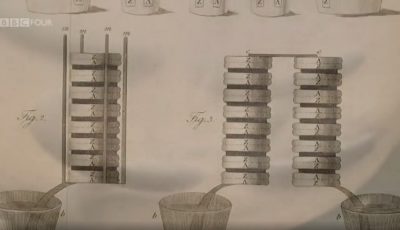
Invented by Italian chemist Alessandro Volta in 1799, the voltaic pile was the first electrical battery that could con...
More from Jim Al-Khalili
Nylon | Chemistry: A Volatile History
Jim Al-Khalili reveals the breakthroughs which harnessed elements' ability to release vast power, showing how scientists are trying to ...
Einstein and the beetle | Gravity and Me: The Force that Shapes our Lives
Professor Jim Al-Khalili explains Einstein's analogy of gravity that he told his son to explain his...
Prof Jim Al Khalili goes inside Calder Hall for his first look inside the core of a nuclear reactor | Britain's Nuclear Secrets: Inside Sellafield
Nuclear physicist Professo...
Sarah-Jayne Blakemore on teenage brains | The Life Scientific
Professor Sarah-Jayne Blakemore talks to Jim Al-Khalili about her research on the developing teenage brain.
The race to prove Maxwell's theory | Shock and Awe: The Story of Electricity
Jim Al-Khalili explains how physics professor Oliver Lodge proved Maxwell's theory that electrom...
Fukushima: Is Nuclear Power Safe? | Horizon
Six months after the explosions at the Fukushima nuclear plant in Japan, Professor Jim Al-Khalili sets out to discover whether nu...
Arabic, the language of God | Science and Islam
Jim Al-Khalili looks at how Islamic caliphs encouraged scientific research and made Arabic the official language of their vas...
Introduction to Electronic Structure and Chemical Properties | Atom
Spec references J248: C2.2h J250: C2.2h. Professor Jim Al-Khalili explains how chemical properties are de...
Electrolysis - Discovery of Potassium | Curriculum Bites
Spec references J248: C3.4b J250: C3.4b. Professor Jim Al-Khalili recreates the electrolysis experiment that lead to...