Synopsis
Nature's most spectacular but lethal light show. The Cerrado grasslands come to life at night when the larva of headlight beetles glow bright green to attract their insect prey
- Programme: The Hunt
- Episode: 05: Nowhere to Hide (Plains)
- Channel: BBC One
- Broadcast year: 2015
- Geography | Ecosystems | Biomes | Biomes and their characteristics
Licence: ERA Licence required
Free to watch for UK schools, colleges and universities with an ERA Licence
UK only
Staff and students of licensed education establishments only
Cannot be adapted
Add Notes
More clips from The Hunt
Polar bear health check-up | The Hunt
As part of a long-term study, Dr Evan Richardson and his team carry out regular health checks on the polar bears of Hudson Bay, Canada.
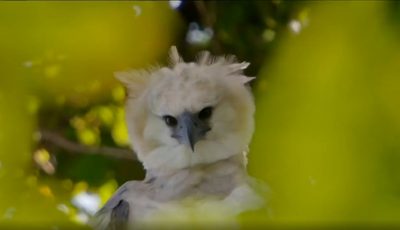
Risking his life to study harpy eagles | The Hunt
The world's most powerful eagle is under threat from human encroachment and consequential habitat loss. Dr Alexander Blanco...
Setting a trap | The Hunt
A Darwin's bark spider sprays a 25 metre bridging line across a river. From this silken thread - which is the toughest natural fibre on the planet ...
Synchronised hunting | The Hunt
Working in perfect unison the dolphins charge to the shore, creating a bow wave that carries their prey onto the muddy banks where the dolphi...
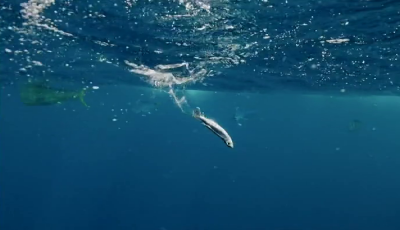
The hunt for flying fish | The Hunt
While the flying fish's ability to jump out of the water helps them avoid dorado fish, it makes them vulnerable to frigate birds flying o...
The octopus that can move on land | The Hunt
A newly discovered species of octopus is able to walk on land.
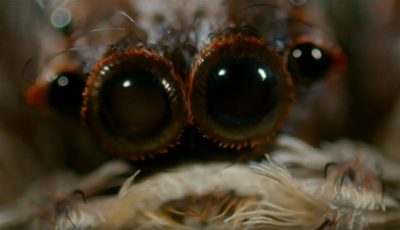
This spider is a genius | The Hunt
These spiders don’t keep a web. Instead they leap through the jungle to hunt their prey.
More resources about Biodiversity and human impact
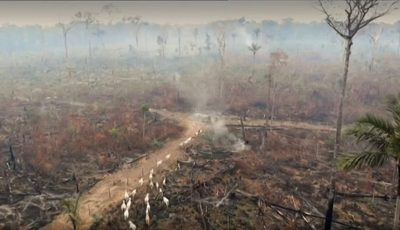
Amazon deforestation | Meat: A Threat to Our Planet?
Liz Bonnin witnesses the devastation of the Amazon rainforest from the sky.
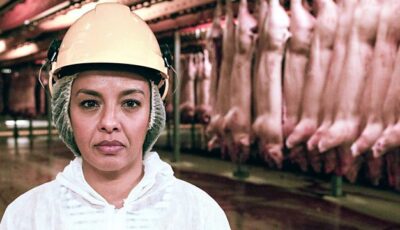
Meat: A Threat to Our Planet?
From colossal farms in America to the destruction of the Amazon, Liz Bonnin investigates how our hunger for meat is killing our planet.
David Attenborough's 100 Years on Planet Earth
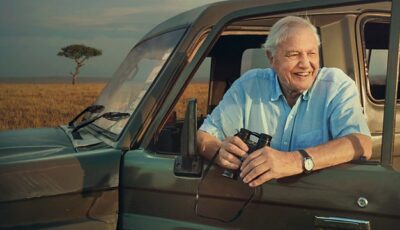
A 90-minute special, broadcast from the Royal Albert Hall, London, celebrating Sir David Attenborough's groundbreaking career ...
Keeping cool | Nature's Microworlds
The Namaqua chameleon has developed an ingenious tactic to avoid the heat of the Namib desert.
04: Galapagos: Enchanted Isles | Eden: Untamed Planet
How the Galapagos became one of the most important areas of biodiversity in the world, with almost 2,000 unique species...
06: Coasts | Blue Planet II
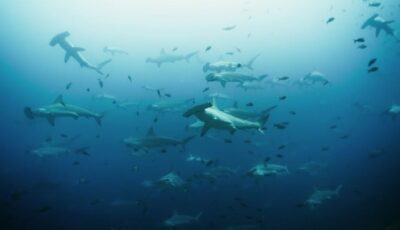
The wildlife series narrated by David Attenborough explores the planet's coasts. They are the most changeable of the ocean worlds, but they offer...
Climate change and greenhouse gases | Climate Change: The Facts
A discussion of the devastating impact of burning fossil fuels.
Cotton production and the Aral Sea crisis | Stacey Dooley Investigates
Stacey Dooley visits the Aral Sea Basin in Kazakhstan, which has almost entirely dried up due to cotto...
Desert amphibians | Life in Cold Blood
Spadefoot toads can stay underground in a state of suspended animation for years, but when they emerge they must feed and breed before...
The smallest fox with the biggest ears! | Super Cute Animals
The fennec's ears help it to survive in the heat of the desert dunes.
03: Coral Reefs | Blue Planet II
The wildlife documentary series narrated by David Attenborough reveals the ingenious ways life exists in the undersea cities of tropical reefs.
Adaptation of Polar Bear | Life In The Snow
An exploration of how polar bears have adapted to living in freezing conditions.
Cattle feedyard | Meat: A Threat to Our Planet?
Liz Bonnin visits a cattle feedyard, a mass factory farm, that contains about 50,000 cows.
Episode 1 | The Great American Buffalo
Ken Burns recounts how the collision between two opposing views of the natural world saw the buffalo, which had numbered in the tens o...
02: Great Barrier Reef | Blue Planet Revisited
To find out what the future holds for the Great Barrier Reef, scientists monitor green turtles, follow families of breeding bi...
07: Our Blue Planet | Blue Planet II
David Attenborough explores the issues behind the series' most spectacular stories and examines the future of the planet.
Adaptation of the Arctic Fox | Life In The Snow
An exploration of how the artic fox's coat has adapted to survival in arctic winters.
Cauldron of Life | Galapagos
Liz Bonnin joins a scientific team aboard the research vessel the Alucia on an expedition across the Galapagos Island.
Chameleon challenge | Life
While searching for a mate across the huge barren Namib desert, a female Namaqua chameleon seeks shade in the knowledge that tasty desert beetles ...
Extinction: The Facts
With a million species at risk of extinction, David Attenborough explores how this crisis of biodiversity has consequences for us all, including puttin...