Synopsis
A fun, engaging and relevant programme, inspiring the viewer to consider the science within and how scientific process can be used to test ideas and develop theories, rather than just looking for a given answer to a known question. Aimed at Key Stage 4, but can also be used by teachers and pupils at Key Stage 3 and beyond Key Stage 4.
- Programme: I-Science
- Channel: BBC Two
- Broadcast year: 2009
- Science
Licence: ERA Licence required
Free to watch for UK schools, colleges and universities with an ERA Licence
UK only
Staff and students of licensed education establishments only
Cannot be adapted
Add Notes
More clips from I-Science
Cell division | i-Science
What is the role of mitosis and meiosis in the human body?
Clones | i-Science
Clones | i-Science
Daphne and Barbara are so similar because they are clones, two people who have exactly the same genetic makeup. When their mother was pregnant, her fertil...
Embryonic stem cells | i-Science
Stem cell research raises ethical issues, which makes some people uncomfortable about it, in spite of the potential benefits.
Gene therapy for cystic fibrosis | i-Science
Spec references J247: B6.3l J250: B6.3i. An example of a genetic disease, cystic fibrosis. Someone sharing their experiences of ...
Rate of photosynthesis | i-Science
Photosynthesis is the chemical reaction through which plants make glucose and oxygen. It is crucial to all life on Earth because it is the...
The eye | i-Science
The eye | i-Science
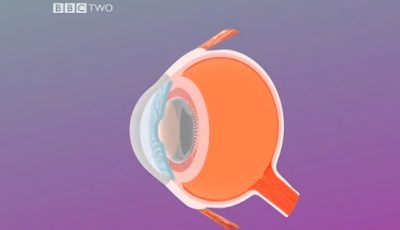
Specialist eye surgeons at the world famous Moorfields Eye Hospital in London, use some of the most technically advanced equipment to take a look inside ...
The human genome | i-Science
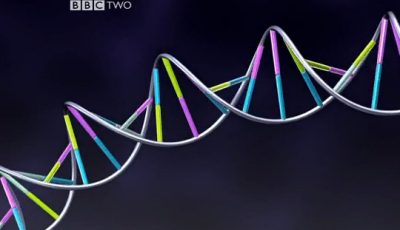
Whether genetic technology causes social harms is really up to us and how we choose to use it.
More resources about Science
Amazon deforestation | Meat: A Threat to Our Planet?
Liz Bonnin witnesses the devastation of the Amazon rainforest from the sky.
Episode 1 | Orbit: Earth's Extraordinary Journey
Kate Humble and Dr Helen Czerski follow the Earth's voyage around the sun for one complete orbit, travelling first from July...
06: Coasts | Blue Planet II
The wildlife series narrated by David Attenborough explores the planet's coasts. They are the most changeable of the ocean worlds, but they offer...
Cotton production and the Aral Sea crisis | Stacey Dooley Investigates
Stacey Dooley visits the Aral Sea Basin in Kazakhstan, which has almost entirely dried up due to cotto...
04: Desert Worlds | The Green Planet
Desert plants spend decades in suspended animation waiting for rain, or they travel to find it. They survive using weapons, camouflage a...
Meat: A Threat to Our Planet?
From colossal farms in America to the destruction of the Amazon, Liz Bonnin investigates how our hunger for meat is killing our planet.
How hurricanes are formed by Earth's rotation | Learning Zone
Physicist Helen Czerski explains that hurricanes happen because the earth is rotating. She shows how, because t...
02: Growing | The Private Life of Plants
David Attenborough continues his incredible journey into the world of plants. Remarkable time-lapse photography reveals how new leav...
Compilation | Attenborough at 90
A short montage of the fun and amazing moments David Attenborough has shared in his documentaries over a 70-year career.
Extinction: The Facts
With a million species at risk of extinction, David Attenborough explores how this crisis of biodiversity has consequences for us all, including puttin...
The pollination process | The Private Life of Plants
David Attenborough describes the process of pollination and how this helps plants reproduce.
07: Our Blue Planet | Blue Planet II
David Attenborough explores the issues behind the series' most spectacular stories and examines the future of the planet.
Orbit: Earth's Extraordinary Journey | Learning Zone
Kate Humble and Dr Helen Czerski follow the Earth's voyage around the sun for one complete orbit, to witness the astonis...
Return of the Emperors | Dynasties
Emperor penguins return to the newly-frozen sea ice to breed.
S08E02: Macaw 911 | Secret Life of the Zoo
The Rothschild's giraffes are expecting a new addition as 12-year-old matriarch Dagmar, whose last calf died after a few days, goe...
Textile industry and water pollution | Stacey Dooley Investigates
Stacey Dooley visits the Citarum river in Indonesia, which has become the most polluted river in the world ...
Adaptation of Polar Bear | Life In The Snow
An exploration of how polar bears have adapted to living in freezing conditions.
01: One Ocean | Blue Planet II
Wildlife documentary series presented by David Attenborough, revealing new worlds and animal behaviours throughout the planet's oceans.
03: Coral Reefs | Blue Planet II
The wildlife documentary series narrated by David Attenborough reveals the ingenious ways life exists in the undersea cities of tropical reefs.
Adaptation of the Arctic Fox | Life In The Snow
An exploration of how the artic fox's coat has adapted to survival in arctic winters.