Synopsis
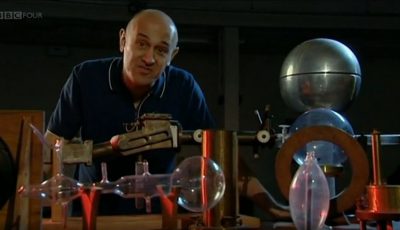
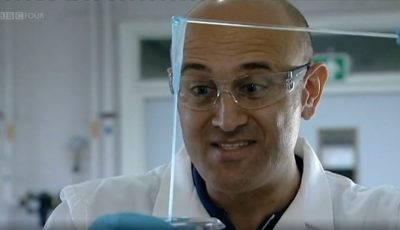
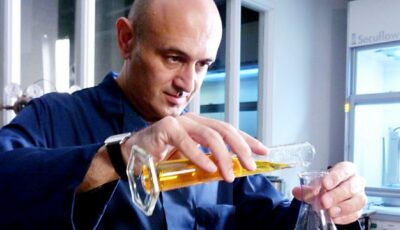
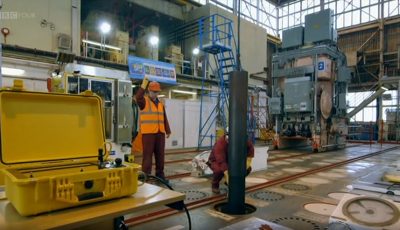
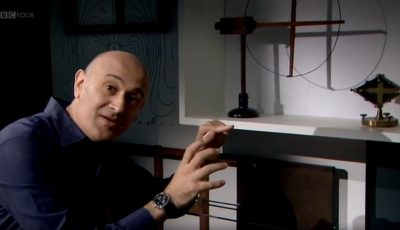
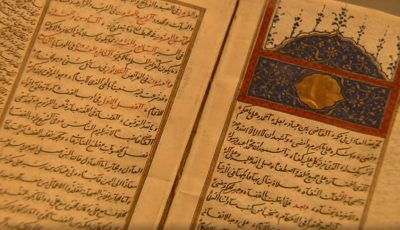
A demonstration of how Diesbach stumbled across the ingredients for the first synthetic paint.

- Programme: Chemistry: A Volatile History
- Episode: 03: The Power of the Elements
- Channel: BBC Four
- Broadcast year: 2010
- Chemistry
Licence: ERA Licence required
Free to watch for UK schools, colleges and universities with an ERA Licence
UK only
Staff and students of licensed education establishments only
Cannot be adapted
Add Notes
More clips from Chemistry: A Volatile History
03: The Power of the Elements | Chemistry: A Volatile History
Jim Al-Khalili reveals the breakthroughs which harnessed elements' ability to release vast power, showing how s...
Alpha particles | Chemistry: A Volatile History
Rutherford stated the fact that most alpha particles go straight through foil is evidence for the atom being mostly empty spa...
Carbon bonds | Chemistry: A Volatile History
Scott Cooper was fascinated by how carbon atoms combined with other atoms, inventing the notion of ''bonds''.
Isomers | Chemistry: A Volatile History
Jim Al-Khalili reveals the history of isomerism which was first noticed in 1827, when Friedrich Woehler prepared cyanic acid.
Nylon | Chemistry: A Volatile History
Jim Al-Khalili reveals the breakthroughs which harnessed elements' ability to release vast power, showing how scientists are trying to ...
Plutonium | Chemistry: A Volatile History
Invented in 1940, scientists quickly realised plutonium was capable of undergoing nuclear fission.
Radium | Chemistry: A Volatile History
Radium was discovered in 1898 by Marie and Pierre Curie.
More resources about Chemistry
02: The Order of the Elements | Chemistry: A Volatile History
Professor Jim Al-Khalili looks at how the early scientists' bid to decode the order of the elements was driven ...
Episode 1 | Planet Oil: The Treasure That Conquered The World
From the moment we first drilled for oil, we opened a Pandora's box that changed the world forever. It transfor...
01: Discovering the Elements | Chemistry: A Volatile History
The story of how the elements were discovered and mapped begins with the alchemists who questioned that the worl...
Episode 2 | Planet Oil: The Treasure That Conquered The World
Professor Iain Stewart looks back at the 1950s, a time when the oil and gas fields of the Middle East became a ...
Materials: How They Work
Materials scientist Mark Miodownik takes a look into the inner world of metals, ceramics and plastics and the microscopic structure that allows them...
03: The Nitrogen Cycle | Bellamy Rides Again
David Bellamy begins his trip around the nitrogen cycle in the Surrey hospital where he languished as a child suffering from acu...
Carbon capture and storage | Planet Oil: The Treasure That Conquered the World
Professor Iain Stewart investigates CCS, a process that is attempting to reduce carbon dioxide...
How is oil formed? | Planet Oil: The Treasure That Conquered the World
Professor Iain Stewart explains the natural process in which over millions of years oil is formed.
Production of Plastic from Crude Oil | Real World Chemistry
Spec references J248: C6.2m, C6.2n, C6.2o J250: C6.1k, C6.1l, C6.1m. This clip demonstrates how plastic is produc...
01: Metal | How It Works
Mark Miodownik traces the history of our love affair with metal. He investigates metals at the atomic level and sees how metal crystals can be grown...
Episode 3 | Planet Oil: The Treasure That Conquered The World
Professor Iain Stewart examines the situation in the 21st century, at which point the global consumption of oil...
Fracking | Planet Oil: The Treasure That Conquered the World
Professor Iain Stewart explains the process of fracking.
Hydrogen | Chemistry: A Volatile History
Cavendish accidentally discovered hydrogen, the first elemental gas, when experimenting with air.
Secrets of the Super Elements
In the first BBC documentary to be filmed entirely on smartphones, Mark Miodownik reveals the weird materials that have built our high-tech world.
04: Fire | How Earth Made Us
Professor Iain Stewart explores man's relationship with fire. Along the way he dives in a mysterious lake in Oregon, climbs a glacier of salt an...
Biological Catalysts | Science Topics
The video provides examples of biological catalysis, such as enzyme use in cheese production and human digestion, followed by an explan...
Bunsen Burner | Chemistry: A Volatile History
Robert Bunsen was a German chemist responsible for the invention of the Bunsen Burner.
Caspian oil | Planet Oil: The Treasure That Conquered the World
Professor Iain Stewart investigates the impact of the Caspian oil.
Changes in the atmosphere | Short Circuit
Bringing chemistry, physics and biology to life using real-life examples, 3D graphics and practical experiments.
Extraction of Iron | Real World Chemistry
Spec references J248: C6.1a J250: C6.1a. The video outlines the industrial process of smelting iron ore into pig iron using a blast...
More from Jim Al-Khalili
Nylon | Chemistry: A Volatile History
Jim Al-Khalili reveals the breakthroughs which harnessed elements' ability to release vast power, showing how scientists are trying to ...
Einstein and the beetle | Gravity and Me: The Force that Shapes our Lives
Professor Jim Al-Khalili explains Einstein's analogy of gravity that he told his son to explain his...
Prof Jim Al Khalili goes inside Calder Hall for his first look inside the core of a nuclear reactor | Britain's Nuclear Secrets: Inside Sellafield
Nuclear physicist Professo...
Sarah-Jayne Blakemore on teenage brains | The Life Scientific
Professor Sarah-Jayne Blakemore talks to Jim Al-Khalili about her research on the developing teenage brain.
The race to prove Maxwell's theory | Shock and Awe: The Story of Electricity
Jim Al-Khalili explains how physics professor Oliver Lodge proved Maxwell's theory that electrom...
Fukushima: Is Nuclear Power Safe? | Horizon
Six months after the explosions at the Fukushima nuclear plant in Japan, Professor Jim Al-Khalili sets out to discover whether nu...
Arabic, the language of God | Science and Islam
Jim Al-Khalili looks at how Islamic caliphs encouraged scientific research and made Arabic the official language of their vas...
Introduction to Electronic Structure and Chemical Properties | Atom
Spec references J248: C2.2h J250: C2.2h. Professor Jim Al-Khalili explains how chemical properties are de...
Electrolysis - Discovery of Potassium | Curriculum Bites
Spec references J248: C3.4b J250: C3.4b. Professor Jim Al-Khalili recreates the electrolysis experiment that lead to...