Synopsis
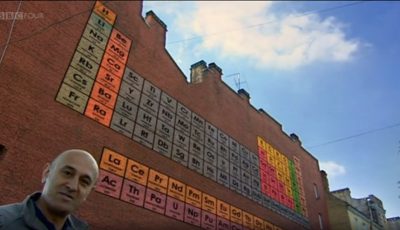
Spec references J248: C1.1a J250: C1.1a. This video provides an introduction to the concept that all materials are composed of atoms. It offers a concise explanation of how particles are arranged in solids, liquids, and gases, and connects these states of matter to the elements found in the periodic table.
- Programme: Curriculum Bites
- Series: KS4
- Episode: Double Science: 1
- Channel: CBBC
- Broadcast year: 2003
-
Chemistry (J248): C1.1a
Combined Science (J250): C1.1a
Licence: ERA Licence required
Free to watch for UK schools, colleges and universities with an ERA Licence
UK only
Staff and students of licensed education establishments only
Cannot be adapted
Add Notes
More clips from Curriculum Bites
Arrangment of the Periodic Table | Curriculum Bites
Spec references J248: C2.2a, C2.2b, C2.2c J250: C2.2a, C2.2b, C2.2c. This video explains the arrangement of the periodic ...
Atomic Structure - Building an Atom | Curriculum Bites
Spec references J248: C1.2b, C1.2d, C1.2e J250: C1.2b, C1.2d, C1.2e. How can an atom be completely described by the in...
Balanced and unbalanced forces | Curriculum Bites
Spec references J249: P2.2b J250: P2.2b. Addresses misconception that objects with a force acting on them must move. Refram...
Breathing | Curriculum Bites
Schools science programme where topics in the double science curriculum are broken down into small chunks.
Cells | Curriculum Bites
Schools science programme where topics in the double science curriculum are broken down into small chunks.
Chromosomes | Curriculum Bites
Schools science programme where topics in the double science curriculum are broken down into small chunks.
Circuits | Curriculum Bites
Schools science programme where topics in the double science curriculum are broken down into small chunks.
Conduction, convection and radiation and insulation. | Curriculum Bites
Spec references J249: P5.2a, P5.2f J250: P5.2a, P5.2f. Conduction, convection and radiation, and ho...
Current in series and parallel circuits | Curriculum Bites
Spec references J249: P3.2a, P3.1f J250: P3.2a, P3.1e . Animated explanation of a current in series and parallel c...
Descriptive treatment of the relative speeds of alpha, beta and gamma | Curriculum Bites
Spec references J249: P6.1l J250: P4.3l. Animation and description of relative speed...
Diffusion | Curriculum Bites
Spec references J247: B2.1a J250: B2.1a. Definition of diffusion and what substances go into the cell.
Digestion | Curriculum Bites
Schools science programme where topics in the double science curriculum are broken down into small chunks.
Electrolysis - Discovery of Potassium | Curriculum Bites
Spec references J248: C3.4b J250: C3.4b. Professor Jim Al-Khalili recreates the electrolysis experiment that lead to...
Elements | Curriculum Bites
Schools science programme where topics in the double science curriculum are broken down into small chunks.
Energy | Curriculum Bites
Schools science programme where topics in the double science curriculum are broken down into small chunks.
Forces & Motion | Curriculum Bites
Schools science programme where topics in the double science curriculum are broken down into small chunks.
Forces on a sky diver and terminal velocity | Curriculum Bites
Spec references J249: P2.2f J250: P2.2f. Speed time graph for a parachutist and terminal velocity (no parachu...
Inheritance | Curriculum Bites
Spec references J247: B5.1h, B5.1i J250: B5.1f, B5.1g. Chromosomes come in pairs except for in sperm and egg cells and why, chromosomes have g...
Mass & Atomic Structure | Curriculum Bites
Schools science programme where topics in the double science curriculum are broken down into small chunks.
Nuclear radiation - what are alpha, beta and gamma radiation? | Curriculum Bites
Spec references J249: P6.1d J250: P4.3d. Animation and explanation of alpha, beta and gamma ...
More resources about Atomic Structure and the Periodic Table
02: The Order of the Elements | Chemistry: A Volatile History
Professor Jim Al-Khalili looks at how the early scientists' bid to decode the order of the elements was driven ...
01: Discovering the Elements | Chemistry: A Volatile History
The story of how the elements were discovered and mapped begins with the alchemists who questioned that the worl...
03: The Nitrogen Cycle | Bellamy Rides Again
David Bellamy begins his trip around the nitrogen cycle in the Surrey hospital where he languished as a child suffering from acu...
Hydrogen | Chemistry: A Volatile History
Cavendish accidentally discovered hydrogen, the first elemental gas, when experimenting with air.
Bunsen Burner | Chemistry: A Volatile History
Robert Bunsen was a German chemist responsible for the invention of the Bunsen Burner.
Marie Curie | Icons
Marie Curie | Icons
Marie Curie discovered new elements, pioneered radiotherapy and was one of the first to examine the sub-atomic world, before a scandal saw her adopted ho...
Oxygen | Chemistry: A Volatile History
The story of how Joseph Priestley discovered oxygen.
04: The Phosphorus Cycle | Bellamy Rides Again
David Bellamy dances his way through an aerobics class to show how phosphorus helps turn food into energy. Then he sits in the...
Arrangment of the Periodic Table | Curriculum Bites
Spec references J248: C2.2a, C2.2b, C2.2c J250: C2.2a, C2.2b, C2.2c. This video explains the arrangement of the periodic ...
Atomic Structure - Building an Atom | Curriculum Bites
Spec references J248: C1.2b, C1.2d, C1.2e J250: C1.2b, C1.2d, C1.2e. How can an atom be completely described by the in...
Mendelleev's Periodic Table | Chemistry: A Volatile History
Spec references J248: C2.2i J250: C2.2i. An account of how Mendeleev arranged the elements by atomic mass to crea...
Properties of Group 1 Metals | Chemistry: A Volatile History
Spec references J248: C4.1a. Demonstration of reactions of lithium, sodium and potassium with water (Contains hi...
05: The Sulphur Cycle | Bellamy Rides Again
Caked from head to foot in volcanic mud, tramping the bogs of Scotland and wallowing in tropical mangrove swamps, David Bellamy l...
Aluminium | Short Circuit
Bringing chemistry, physics and biology to life using real-life examples, 3D graphics and practical experiments.
Ammonia | Short Circuit
Bringing chemistry, physics and biology to life using real-life examples, 3D graphics and practical experiments.
Atomic Structure - Revision | GCSE Bitesize Revision
Spec references J248: C1.2b, C1.2d, C1.2e J250: C1.2b, C1.2d, C1.2e. A fast-paced overview of the basics of atomic struc...
Elements | Curriculum Bites
Schools science programme where topics in the double science curriculum are broken down into small chunks.
Gallium | Chemistry: A Volatile History
Gallium is in a liquid state over the widest range of temperatures than any other element.
Helium | Chemistry: A Volatile History
Norman Lockyer recorded a new yellow line by observing the sun through London smog and, assuming the new element to be a metal, named ...
How are elements made? | Wonders of the Universe
Brian Cox explains what elements are and how they are formed, including the importance of carbon.