Synopsis
In an edition devoted to celebrating Britons who have won the Nobel Prize, Adam Hart-Davis lauds John Cockcroft's work on splitting the atom and Dorothy Hodgkin's discovery of the structure of penicillin. He also visits Ayrshire to explains how the instigator of the award, Alfred Nobel, came to invent dynamite after his brother's death.
- Programme: Local Heroes
- Series: 5
- Episode: 04: Nobel Prize Winners
- Channel: BBC Two
- Broadcast year: 2000
Licence: ERA Licence required
Free to watch for UK schools, colleges and universities with an ERA Licence
UK only
Staff and students of licensed education establishments only
Cannot be adapted
Add Notes
More clips from Local Heroes
S05E01: London | Local Heroes
London is the first destination, where he investigates the invention of the lightning conductor, the pressure cooker and the electrocardiogram.
S05E02: South Coast | Local Heroes
Adam Hart-Davis continues his bicycle tour of Britain with a visit to England's south coast, where he celebrates the construction of Brigh...
S05E03: Yorkshire | Local Heroes
Adam Hart-Davis stops off in Yorkshire as he continues his celebration of unsung scientists. In Whitby, he lauds whaling scientist William S...
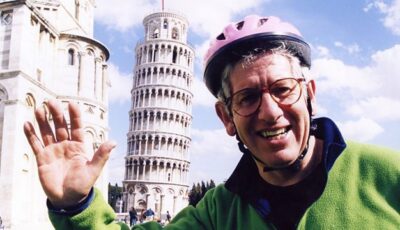
S05E05: Italy | Local Heroes
Adam Hart-Davis sets his sights further afield with a trip to Italy, where he ascends the Leaning Tower of Pisa in a bid to reproduce Galileo's ...
S05E06: East Midlands | Local Heroes
In the final programme, viewers show off their ideas for hovercraft, ice lenses, scientific musical instruments and bar-snack separators...
More resources about Atomic Structure
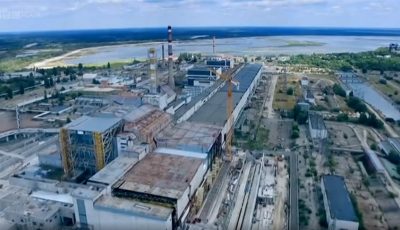
Chernobyl disaster | Inside Chernobyl's Mega Tomb
Introduction to the 1986 Chernobyl disaster and the temporary construction that was built to contain the radiation.
History of the Atom: From Rutherfor to Bohr | Chemistry: A Volatile History
Spec references J248: C1.2a J250: C1.2a. Professor Jim Al-Khalili explains the history of the ato...
03: Off the Scale | Richard Hammond's Invisible Worlds
Richard Hammond explores the miniature universe around us, from microscopic changes to ice crystals that can trigger a...
02: Out of Sight | Richard Hammond's Invisible Worlds
Richard Hammond uses groundbreaking imaging technology to take the viewer on a journey of discovery beyond the visible ...
02: Marie Curie's Radium | The Six Experiments That Changed The World
From Galileo to Einstein, from Faraday to Mendel: modern scientists try to recreate the seminal experim...
Albert Einstein | Icons
Einstein was a physicist who rewrote the rules of the universe. Hounded from his native Germany by the Nazis and fearful of what they were capable of...
Alpha particles | Chemistry: A Volatile History
Rutherford stated the fact that most alpha particles go straight through foil is evidence for the atom being mostly empty spa...
Electricity and the Atomic scale | Shock and Awe: The Story of Electricity
Jim Al-Khalili explores how Ernest Rutherford's work on the atom revealed what electricity was on ...
Half-life | Short Circuit
Spec references J249: P6.1j, P6.2b J250: P4.3j. Explanation and animation - Nuclear decay is random. Half-life.
Radioactivity | Curriculum Bites
Schools science programme where topics in the double science curriculum are broken down into small chunks.
The big bang and the creation of hydrogen and helium | Atom
George Gamow believed that helium existed in the universe before the sun and the stars were formed.
The discovery of nuclear fission | Atom
Scientists in the 1930's toyed with neutrons colliding with nucleai and were excited at the thought that such experiments could creat...
The strong nuclear force | Atom
Like a magnet, protons will repel each other, however, as soon as they are close enough they will stick together.
Types of nuclear radiation | Short Circuit
An explanation of alpha, beta and gamma radiation.
02: What is the World Made Of? | The Story of Science: Power, Proof and Passion
Michael Mosley explores how history shaped science. Here, he looks at how atomic theories and...
An Alpha, Beta and Gamma of Radioactivity | Short Circuit
Bringing chemistry, physics and biology to life using real-life examples, 3D graphics and practical experiments.
Chemical weapons | Inside Porton Down: Britain's Secret Weapons Research Facility
Introducing the idea of chemical and biological weapons, leading onto pathogens.
Discovery of the Neutron | Atom
Spec references J248: C1.2d, C1.2e J250: C1.2d, C1.2e. Professor Jim Al-Khalili explains how James Chadwick discovered the neutron. This solv...
Inside Porton Down: Britain's Secret Weapons Research Facility
Michael Mosley investigates Porton Down, Britain's most secretive and controversial military research base. He...
Lab demonstration of alpha beta gamma penetration properties. | Short Circuit
Spec references J249: P6.1l J250: P4.3l. Laboratory demonstration of the penetration propertie...
More from Adam Hart-Davis
S02E06: South East | Local Heroes
Adam Hart-Davis's search for Britain's greatest scientific pioneers is in South-East England, where he looks at the work of Hertha Ayrton, ...
The Clock That Changed the World | A History of the World
Adam Hart-Davis tells the story of the amazing 280-year-old wooden clock, made in Lincolnshire, that changed timeke...
03: The Aztecs, Maya and Incas | What the Ancients Did for Us
Roving reporter Hermione Cockburn describes Aztec, Mayan and Incan inventions, including chocolate, suspension ...
20: Anglesey | Hart-Davis on History
Adam Hart-Davis and Jayne Constantinis visit Anglesey, featuring a look at the Menai Straits, Welsh music, Beaumaris Castle, Amlwch Port...
02: The Applyance of Science | What the Stuarts Did for Us
Hart-Davis travels around Britain to introduce the idea and inventions of the Stuart Period in science and enginee...
01: Seeying the Worlde | What The Tudors Did For Us
The development of scientific instruments gave the Tudors new worlds to explore, both on land and on sea. And did the Eng...
04: Crime and Punishment | What the Victorians Did For Us
Adam Hart-Davis investigates the Victorian innovations that left a lasting impression on British society. In this p...
01: Life of Luxury | What the Romans Did for Us
Adam Hart-Davis investigates the lavish lifestyles of the Romans, visiting the sumptuous villa at Fishbourne, the famous bath...
15: West Norfolk | The History Hour
Adam Hart-Davis concludes his tour of Britain with a visit to west Norfolk to look at the region's farming history.