Synopsis
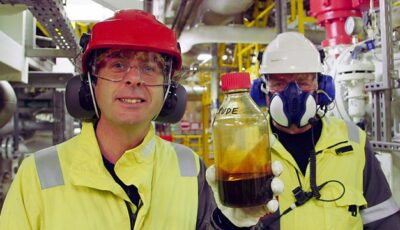
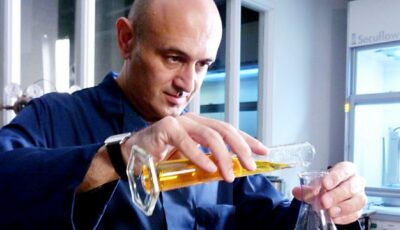
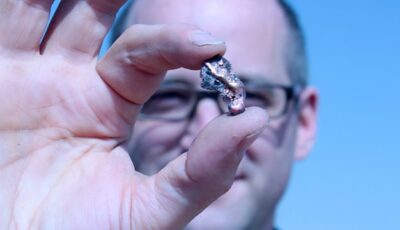
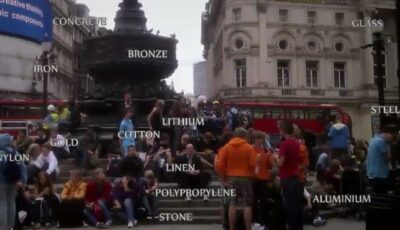
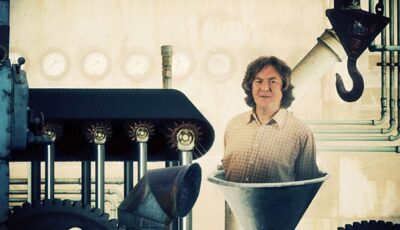
James May distills the essence of all you need to know about chemistry, including how pheromones work, if lead can be turned into gold and much more.
- Programme: James May's Things You Need to Know
- Series: 2
- Episode: 06:...about Chemistry
- Channel: BBC Two
- Broadcast year: 2013
- Science
Licence: ERA Licence required
Free to watch for UK schools, colleges and universities with an ERA Licence
UK only
Staff and students of licensed education establishments only
Cannot be adapted
Add Notes
More clips from James May's Things You Need to Know
S02E01:...about Einstein | James May's Things You Need to Know
James May reveals what you need to know about Albert Einstein and his theories, including what E=mc2 actually ...
S02E02:...about Brains | James May's Things You Need to Know
Do you really know what is happening inside your head? James May cranks open your cranium to find out about beha...
S02E03:...about Evolution | James May's Things You Need To Know
You might relish cabbage about as much as a two-month bout of chickenpox, but would you consider it as a leaf...
S02E04:...about Speed | James May's Things You Need to Know
James May explains all you need to know about speed with a fast-moving mix of animation and motion graphics, incl...
S02E05:...about Engineering | James May's Things You Need to Know
James May uncovers the fascinating science of engineering, giving a 'nuts and bolts' account of how things ...
Why Do Cats Have Nine Lives? | James May's Things You Need to Know
James May explains about speed, using a fast-moving mix of animation and graphics. Here he explores why te...
More resources about Chemistry
02: The Order of the Elements | Chemistry: A Volatile History
Professor Jim Al-Khalili looks at how the early scientists' bid to decode the order of the elements was driven ...
Episode 1 | Planet Oil: The Treasure That Conquered The World
From the moment we first drilled for oil, we opened a Pandora's box that changed the world forever. It transfor...
01: Discovering the Elements | Chemistry: A Volatile History
The story of how the elements were discovered and mapped begins with the alchemists who questioned that the worl...
Episode 2 | Planet Oil: The Treasure That Conquered The World
Professor Iain Stewart looks back at the 1950s, a time when the oil and gas fields of the Middle East became a ...
Materials: How They Work
Materials scientist Mark Miodownik takes a look into the inner world of metals, ceramics and plastics and the microscopic structure that allows them...
03: The Nitrogen Cycle | Bellamy Rides Again
David Bellamy begins his trip around the nitrogen cycle in the Surrey hospital where he languished as a child suffering from acu...
Carbon capture and storage | Planet Oil: The Treasure That Conquered the World
Professor Iain Stewart investigates CCS, a process that is attempting to reduce carbon dioxide...
How is oil formed? | Planet Oil: The Treasure That Conquered the World
Professor Iain Stewart explains the natural process in which over millions of years oil is formed.
Production of Plastic from Crude Oil | Real World Chemistry
Spec references J248: C6.2m, C6.2n, C6.2o J250: C6.1k, C6.1l, C6.1m. This clip demonstrates how plastic is produc...
01: Metal | How It Works
Mark Miodownik traces the history of our love affair with metal. He investigates metals at the atomic level and sees how metal crystals can be grown...
Episode 3 | Planet Oil: The Treasure That Conquered The World
Professor Iain Stewart examines the situation in the 21st century, at which point the global consumption of oil...
Fracking | Planet Oil: The Treasure That Conquered the World
Professor Iain Stewart explains the process of fracking.
Hydrogen | Chemistry: A Volatile History
Cavendish accidentally discovered hydrogen, the first elemental gas, when experimenting with air.
Secrets of the Super Elements
In the first BBC documentary to be filmed entirely on smartphones, Mark Miodownik reveals the weird materials that have built our high-tech world.
04: Fire | How Earth Made Us
Professor Iain Stewart explores man's relationship with fire. Along the way he dives in a mysterious lake in Oregon, climbs a glacier of salt an...
Biological Catalysts | Science Topics
The video provides examples of biological catalysis, such as enzyme use in cheese production and human digestion, followed by an explan...
Bunsen Burner | Chemistry: A Volatile History
Robert Bunsen was a German chemist responsible for the invention of the Bunsen Burner.
Caspian oil | Planet Oil: The Treasure That Conquered the World
Professor Iain Stewart investigates the impact of the Caspian oil.
Changes in the atmosphere | Short Circuit
Bringing chemistry, physics and biology to life using real-life examples, 3D graphics and practical experiments.
Extraction of Iron | Real World Chemistry
Spec references J248: C6.1a J250: C6.1a. The video outlines the industrial process of smelting iron ore into pig iron using a blast...
More from James May
Why Do Cats Have Nine Lives? | James May's Things You Need to Know
James May explains about speed, using a fast-moving mix of animation and graphics. Here he explores why te...
S01E01 | James May's Cars of the People
James May discovers how cars became an everyday part of people's lives. His journey begins in Europe, where he reveals a tale of war,...
S01E06: Music | Dara O'Briain's Science Club
Dara O Briain and his expert team examine the science behind music. James May explores how music is linked to our emotions and M...
Creating moulds | James May's Man Lab
James re-forms some impractical kitchen items into the perfect lemon squeezer in his very own foundry.
06: Big City, Bright Lights | James May's 20th Century
Each day 180,000 people move into a city somewhere on the planet. James May investigates how the high-rise urban livin...