Synopsis
Today, with Howie Watkins, she looks at variables and how set up reliable scientific experiments using demolition and underpants as examples.
- Programme: Science in Action
- Episode: Variables
- Channel: BBC Two
- Broadcast year: 1999
Licence: ERA Licence required
Free to watch for UK schools, colleges and universities with an ERA Licence
UK only
Staff and students of licensed education establishments only
Cannot be adapted
Add Notes
More clips from Science In Action
Animal nutrition | Science In Action
A revision programme covering biology.
Biovariables | Science in Action
Science programme about bio-variables.
Cells | Science In Action
A revision programme covering biology.
Cells under a microscope | Science In Action
Spec references J247: B1.1a. Showing onion cells and cheek cells under a microscope.
Electron microscope | Science In Action
Spec references J247: B1.1c. Electron microscope to see the structure of algae and observe cell processes.
Microbes | Science In Action
Lively real-life situations demonstrating the science in everyday life.
Photosynthesis | Science In Action
A revision programme covering biology.
Reproduction | Science In Action
A revision programme covering biology.
Respiration | Science In Action
A revision programme covering biology.
Skin cells in research | Science In Action
Spec references J247: . Growing skin for patients, using keratinocyte cells from the patient so that the skin is not rejected.
More resources about Science
Meat: A Threat to Our Planet?
From colossal farms in America to the destruction of the Amazon, Liz Bonnin investigates how our hunger for meat is killing our planet.
06: Coasts | Blue Planet II
The wildlife series narrated by David Attenborough explores the planet's coasts. They are the most changeable of the ocean worlds, but they offer...
Amazon deforestation | Meat: A Threat to Our Planet?
Liz Bonnin witnesses the devastation of the Amazon rainforest from the sky.
Can Scientists Save the World? | Panorama
Richard Bilton meets the scientists trying to save the world from the consequences of climate change and investigates whether they...
Episode 1 | Orbit: Earth's Extraordinary Journey
Kate Humble and Dr Helen Czerski follow the Earth's voyage around the sun for one complete orbit, travelling first from July...
Cauldron of Life | Galapagos
Liz Bonnin joins a scientific team aboard the research vessel the Alucia on an expedition across the Galapagos Island.
Keeping cool | Nature's Microworlds
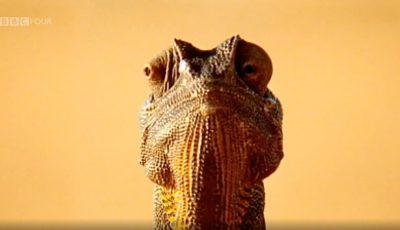
The Namaqua chameleon has developed an ingenious tactic to avoid the heat of the Namib desert.
Extinction: The Facts
With a million species at risk of extinction, David Attenborough explores how this crisis of biodiversity has consequences for us all, including puttin...
The pollination process | The Private Life of Plants
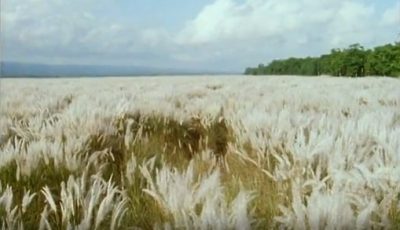
David Attenborough describes the process of pollination and how this helps plants reproduce.
Cotton production and the Aral Sea crisis | Stacey Dooley Investigates
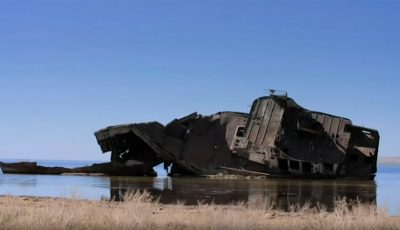
Stacey Dooley visits the Aral Sea Basin in Kazakhstan, which has almost entirely dried up due to cotto...
02: Growing | The Private Life of Plants
David Attenborough continues his incredible journey into the world of plants. Remarkable time-lapse photography reveals how new leav...
03: Coral Reefs | Blue Planet II
The wildlife documentary series narrated by David Attenborough reveals the ingenious ways life exists in the undersea cities of tropical reefs.
Desert amphibians | Life in Cold Blood
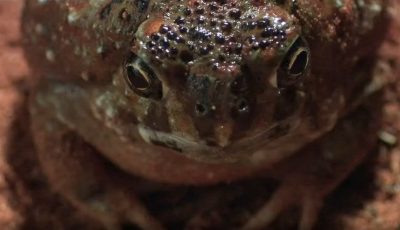
Spadefoot toads can stay underground in a state of suspended animation for years, but when they emerge they must feed and breed before...
How hurricanes are formed by Earth's rotation | Learning Zone
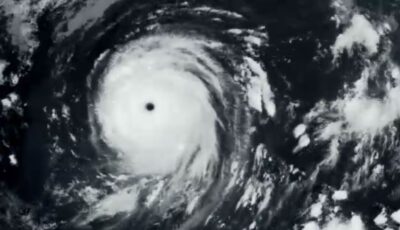
Physicist Helen Czerski explains that hurricanes happen because the earth is rotating. She shows how, because t...
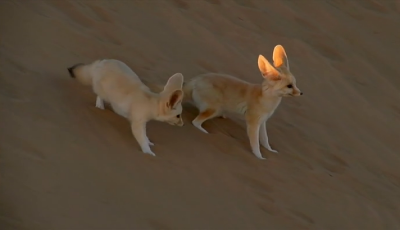
The smallest fox with the biggest ears! | Super Cute Animals
The fennec's ears help it to survive in the heat of the desert dunes.
01: Introduction | The Blue Planet
David Attenborough narrates a natural history of the oceans. We travel to the depths of the seas to reveal a spectacular variety of life, ...
01: Travelling | The Private Life of Plants
David Attenborough begins his incredible journey into the world of plants with a look at how plants move from place to place.
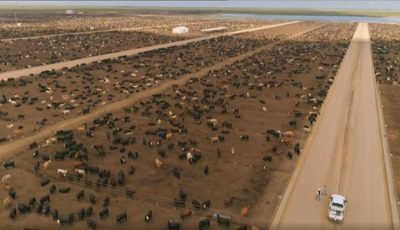
Cattle feedyard | Meat: A Threat to Our Planet?
Liz Bonnin visits a cattle feedyard, a mass factory farm, that contains about 50,000 cows.
Environmental impact on the Aral Sea | Stacey Dooley Investigates
Stacey Dooley visits the Aral Sea Basin in Kazakhstan, which has almost entirely dried up due to cotton pro...
Importance of marine protected areas | A Perfect Planet
Spec references J247: B6.1b, B6.1c, B6.1d J250: B6.1b, B6.1c. How an increase of carbon dioxide and overfishing impac...