Synopsis
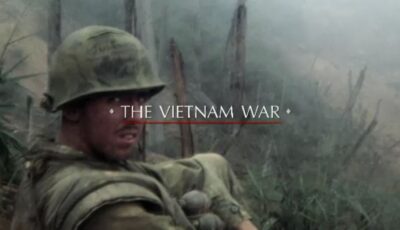
After losing the Battle of Dien Bien Phu the French leave Vietnam. A stream of refugees flee to the south after the Communist north institute a harsh land reform program. The north, with Soviet military assistance, seeks to reunify the country by using the Viet Cong to destabilise the South, prompting American intervention which escalates after the Gulf of Tonkin incident. American casualties mount in an increasingly unpopular and seemingly purposeless war that was difficult to wage successfully. President Lyndon B. Johnson's stature is reduced following the Tet Offensive. The bombing of North Vietnam is interspersed with peace negotiations, which prove fruitless. Interviewees include Robert McNamara, William Westmoreland, Nguyen Vo Giap, Bui Diem, Jack Valenti and Clark Clifford. The pre-credits scene portrays the destruction caused by the Vietnam War.
- Programme: Cold War
- Episode: 11: Vietnam: 1954-1968
- Channel: BBC Two
- Broadcast year: 1998
- History | The Cold War
Licence: ERA Licence required
Free to watch for UK schools, colleges and universities with an ERA Licence
UK only
Staff and students of licensed education establishments only
Cannot be adapted
Add Notes
More clips from Cold War
01: Comrades: 1917-1945 | Cold War
Both the United States and the Soviet Union drifted apart after the Russian Revolution of 1917, the Russian Civil War and the Paris Peace ...
02: Iron Curtain: 1945-1947 | Cold War
The wartime allies demobilise - the United States enjoys its economic strength and resurgence while Britain and the rest of Europe is ...
03: Marshall Plan: 1947-1952 | Cold War
For both altruistic and self-serving purposes, the United States provides massive grants of aid to the countries of Europe in the for...
04: Berlin: 1948-1949 | Cold War
By 1947, the United States placed as a high priority the revival of the German economy, an approach opposed by the Soviet Union. After the i...
05: Korea: 1949-1953 | Cold War
Korea after the Second World War was occupied by both the Soviets and the Americans, who respectively installed Kim Il Sung and Syngman Rhee ...
06: Reds: 1948-1953 | Cold War
The fears the leadership of both sides had were projected inwards towards their own people. In the United States the House Committee on Un-Ame...
07: After Stalin: 1953-1956 | Cold War
Nikita Khrushchev becomes Soviet leader after the death of Stalin. Khrushchev rolls back a number of oppressive measures that existed ...
08: Sputnik: 1949-1961 | Cold War
As a consequence of the atomic spies, the Soviet Union joined the nuclear club, and the two superpowers compete to develop their nuclear ar...
09: The Wall: 1958-1963 | Cold War
West Germany, and West Berlin, become more affluent, prompting a surge of East Germans to cross the borders in Berlin, kept open under the...
10: Cuba: 1959-1962 | Cold War
Fidel Castro comes to power following the Cuban Revolution. Cuba aligns itself with the Soviet Union and the government starts nationalising A...
12: MAD: 1960-1972 | Cold War
The United States nuclear strategy of counterforce, intended to counter a Soviet conventional attack by targeting military facilities, is discr...
14: Red Spring: 1960s | Cold War
Likewise the Soviet Union started the decade with growing openness and optimism. There was also an emerging cohort of youth with no memory o...
15: China: 1949-1972 | Cold War
Following the Chinese Revolution Mao Zedong aligns China firmly with the Soviet Union. China becomes the recipient of Soviet aid, supports Co...
16: Détente: 1969-1975 | Cold War
Nixon builds closer relations with China and the USSR, hoping to leverage an honourable US exit from Indochina. The Soviet Union is fearfu...
17: Good Guys, Bad Guys: 1967-1978 | Cold War
Under Détente the superpowers continued their rivalry, but carefully avoided direct conflict by courting allies in the developi...
18: Backyard: 1954-1990 | Cold War
The United States saw the emergence of leftist movements in different Latin American countries as threatening to its commercial interests,...
19: Freeze: 1977-1981 | Cold War
Carter's ambitious proposals for total multilateral nuclear disarmament are rejected by Brezhnev; his championing of human rights does not w...
20: Soldiers of God: 1975-1988 | Cold War
Nur Mohammad Taraki comes to power in Afghanistan and attempts to modernise the country on Marxist-Leninist lines, provoking a rebe...
21: Spies: 1944-1994 | Cold War
Throughout the Cold War both sides sought intelligence about their opponents using spies, satellites and other means. For political reasons, ...
22: Star Wars: 1981-1988 | Cold War
Reagan's 1983 ''Evil Empire'' speech sets the tone for a more aggressive US posture against the Soviet Union, and the costly arms race is...
More resources about The Vietnam War
05: 1968 Vietnam | Peter and Dan Snow: 20th Century Battlefields
Peter and Dan Snow reveal the techniques use by US marines to flush out Communist fighters who lived in a ne...
07: Chasing Ghosts (June 1968-May 1969) | The Vietnam War
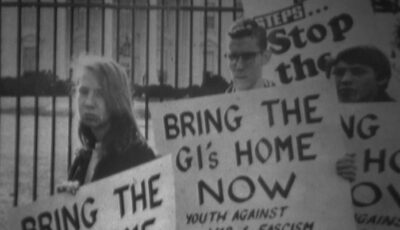
Public support for the war declines, and American men of draft age face difficult decisions.
History | GCSE Bitesize Revision
This GCSE Bitesize special tells the story of Modern History using archive film and action figures, and shows the horror of medieval surgery...
02: Riding the Tiger (1961-1963) | The Vietnam War
President Kennedy and his advisers wrestle with how deeply to get involved in South Vietnam. As the increasingly autocrati...
03: Hell Come to Earth (January 1964-December 1965) | The Vietnam War
With South Vietnam in chaos, Hanoi hardliners seize the initiative and send combat troops.
Vietnam War | Panorama
Panorama looks at the Vietnam War. Includes an investigation into the attitudes of US citizens to the war and coverage of Sennator Robert Kennedy's sp...
08: A Sea of Fire (April 1969-May 1970) | The Vietnam War
With morale plummeting in Vietnam, President Nixon begins withdrawing American troops. As news breaks of an unthink...
01: Deja Vu (1858-1961) | The Vietnam War
Revolutionaries led by Ho Chi Minh end French colonial occupation. Vietnam is divided in two at Geneva.
01: Lyndon Johnson's War | Wheeler on America
A look back at the classic series Wheeler on America from 1996. Charles Wheeler traces changes in US society since the liberal ...
04: Doubt (January 1966-June 1967) | The Vietnam War
Defying American airpower, North Vietnamese troops stream down the Ho Chi Minh Trail into the south.
05: This is What We Do (July 1967-December 1967) | The Vietnam War
American casualties and enemy body counts mount as marines face deadly North Vietnamese ambushes.
06: Things Fall Apart (January 1968-June 1968) | The Vietnam War
North Vietnamese and Viet Cong forces launch surprise attacks on cities and military bases.
09: Fratricide (May 1970-March 1973) | The Vietnam War
Massive US airpower makes the difference in halting an unprecedented North Vietnamese offensive.
Lyndon Johnson's War | Wheeler on America
(1/5) Charles Wheeler looks at how the Vietnam War destroyed President Johnson, and a conspiracy by the Nixon presidential campaign.
10: The Weight of Memory (March 1973-Onward) | The Vietnam War
While Watergate forces Nixon to resign, the Vietnamese continue to savage one another.
23: 1975: War of the Flea | People's Century
While in the second half of the century there are fewer conventional wars, civil conflicts under the backdrop of superpower riva...
Harold Wilson Interview | Panorama
Including an interview with Harold Wilson in which the prospect of devaluation of the pound is discussed along with the Vietnam War and un...
S09E01: Ophans Of The Airlift | Secret History
Documentary looking at the airlift of over one hundred orphans from Saigon in 1975, orchestrated by the editor of the Daily Ma...
Vietnam: Journal of a War | Panorama
Panorama reports on the Vietnam War.