Synopsis
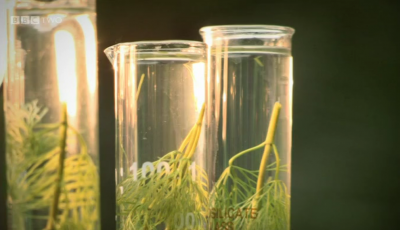
Seeds need the conditions to right in order to be able to germinate.
- Programme: Bitesize Science
- Channel: BBC Two
- Broadcast year: 2014
- Biology | Reproduction, genetics and evolution | Reproduction | Fertilisation
Licence: ERA Licence required
Free to watch for UK schools, colleges and universities with an ERA Licence
UK only
Staff and students of licensed education establishments only
Cannot be adapted
Add Notes
More clips from Bitesize Science
All life needs water | Bitesize Science
Osmosis is a special type of diffusion, involving water, where molecules move from a high to a low concentration.
Beneath the surface | Bitesize Science
Microscopes continue to develop over time, giving us access to increasingly incredible magnification.
Blood Vessels | Bitesize Science
A short guide on blood vessels in the body.
Dance of the chromosomes | Bitesize Science
Mitosis is a type of cell replication that is essential to the human body's ability to grow and repair.
Endothermic and exothermic reactions | Bitesize Science
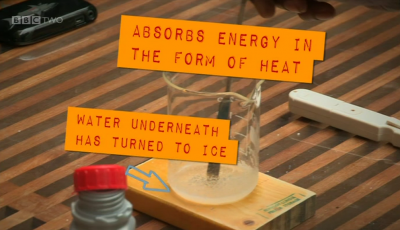
Endothermic reactions absorb heat, while exothermic reactions give off heat.
Enzyme power and food as fuel | Bitesize Science
Enzymes are biological catalysts which help us to get the energy we need from food to survive.
Growing bacteria | Bitesize Science
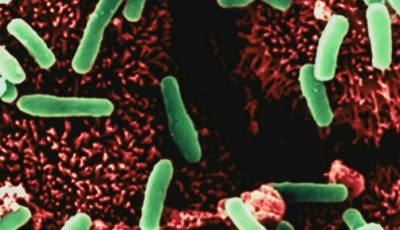
Bacteria reproduce by cloning themselves, and in the right conditions can reproduce very quickly.
Internal reflection | Bitesize Science
An examination of how light can be internally reflected, and how this is used for carrying information in fibre optic cables.
Newtons laws | Bitesize Science
Newton's laws of motion continue to underpin principles in modern day physics.
Photosynthisis | Bitesize Science
Photosynthesis is essential to life on this planet.
Solubility | Bitesize Science
Solubility is the measure of how much solute can dissolve in a solvent.
The circulatory system | Bitesize Science
A short guide on the circulatory system.
The feather and the hammer | Bitesize Science
Air resistance affects different objects and how they fall differently, just as Galileo suggested.
The force of friction | Bitesize Science
Any time one surface moves over another, there is a force of friction.
The oceans are changing | Bitesize Science
Scientists believe that our oceans are becoming more acidic due to the CO2 we are producing being absorbed by the oceans.
The power of invisibility | Bitesize Science
Light moves at different speeds through different objects, this can make objects appear in a different place to where they actua...
The race is on | Bitesize Science
The rate of a chemical reaction depends on the temperature, concentration, particle size and any catalysts present.
More resources about Biology
03: Jungles | Planet Earth II
Jungles provide the richest habitats on the planet - mysterious worlds of high drama where extraordinary animals attempt to survive in the most...
03: Food on the Brain | The Secrets of Your Food
Michael Mosley and James Wong explore the effect that our food has on our most important and, in terms of energy consumption...
02: Pus | Pain, Pus and Poison: The Search for Modern Medicines
Dr Michael Mosley explores our earliest attempts to tackle infection and how scientists, chemists and doctors...
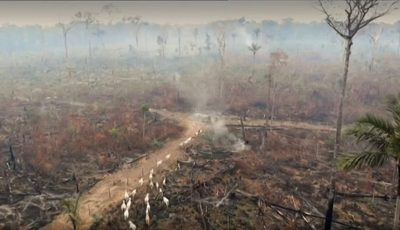
Amazon deforestation | Meat: A Threat to Our Planet?
Liz Bonnin witnesses the devastation of the Amazon rainforest from the sky.
Alcohol | The Truth About...
A&E doctor Javid Abdelmoneim is on a mission to find out the truth about alcohol, including why the government cut the recommended weekly limit ...
Meat: A Threat to Our Planet?
From colossal farms in America to the destruction of the Amazon, Liz Bonnin investigates how our hunger for meat is killing our planet.
01: Tropical Worlds | The Green Planet
Tropical rainforests are plant battlegrounds. New filming techniques allow us to enter the world of plants to see it from their perspe...
02: Savannah | Africa
David Attenborough takes a breathtaking journey through Africa, looking at the constantly changing landscape of east Africa and creatures found nowhere...
01: Creation | Inside the Human Body
Using state-of-the-art graphics, Michael Mosley shows the sequence of biological events that lead to human birth.
After Life: The Strange Science of Decay
Dr George McGavin examines the fascinating science of decay when a unique experiment involving a rotting kitchen and garden is captu...
Diabetes: The Hidden Killer | Panorama
An investigation into the health epidemic that afflicts almost one in ten people in Birmingham and can lead to heart failure, blindnes...
Cells under a microscope | Science In Action
Spec references J247: B1.1a. Showing onion cells and cheek cells under a microscope.
01: Coasts | Planet Earth III
Sir David Attenborough explores the dangerous frontiers created by the world's coasts, where animals fight for survival amidst constant change.
07: Human | Planet Earth III
Discover the extraordinary ways in which wildlife survives in a rapidly changing human world. From cobras hunting in houses to macaques stealing...
05: Deserts | Planet Earth
David Attenborough looks at deserts around the world from Namibia to Chile, unravelling the secrets behind desert survival and revealing their eph...
02: First to Last | Inside the Human Body
Michael Mosley shows how, from its first breath to its last, the body performs countless small miracles to stay alive.
David Attenborough's 100 Years on Planet Earth
A 90-minute special, broadcast from the Royal Albert Hall, London, celebrating Sir David Attenborough's groundbreaking career ...
The pollination process | The Private Life of Plants
David Attenborough describes the process of pollination and how this helps plants reproduce.
01: Pain | Pain, Pus and Poison: The Search for Modern Medicines
Michael Mosley discovers what pain is and how we were able to control it with the discovery of morphine at t...
Healthy Eating | The Truth About...
Documentary in which Fiona Phillips teams up with leading scientists to investigate how people can eat and drink themselves to good health.